
Prospecting vs Lead Generation: Key Differences Every B2B Revenue Team Must Understand
Learn the operational difference between sales prospecting and lead generation, fix misaligned KPIs, and build a pipeline that converts.
Most B2B revenue teams treat prospecting and lead generation as synonyms. They are not. Conflating them produces misaligned KPIs, finger-pointing between sales and marketing, and a pipeline that looks busy but converts poorly. The distinction is operational, not semantic, and getting it wrong has a direct cost.
How to Define Sales Prospecting and Lead Generation
Sales prospecting is the proactive, rep-driven process of identifying potential buyers who fit your ideal customer profile and contacting them directly before they have raised their hand. It is always outbound. The seller initiates every interaction. No form was filled, no ad was clicked, and no content was consumed. Prospecting is owned by the sales team, and the pipeline it creates is directly attributable to rep activity.
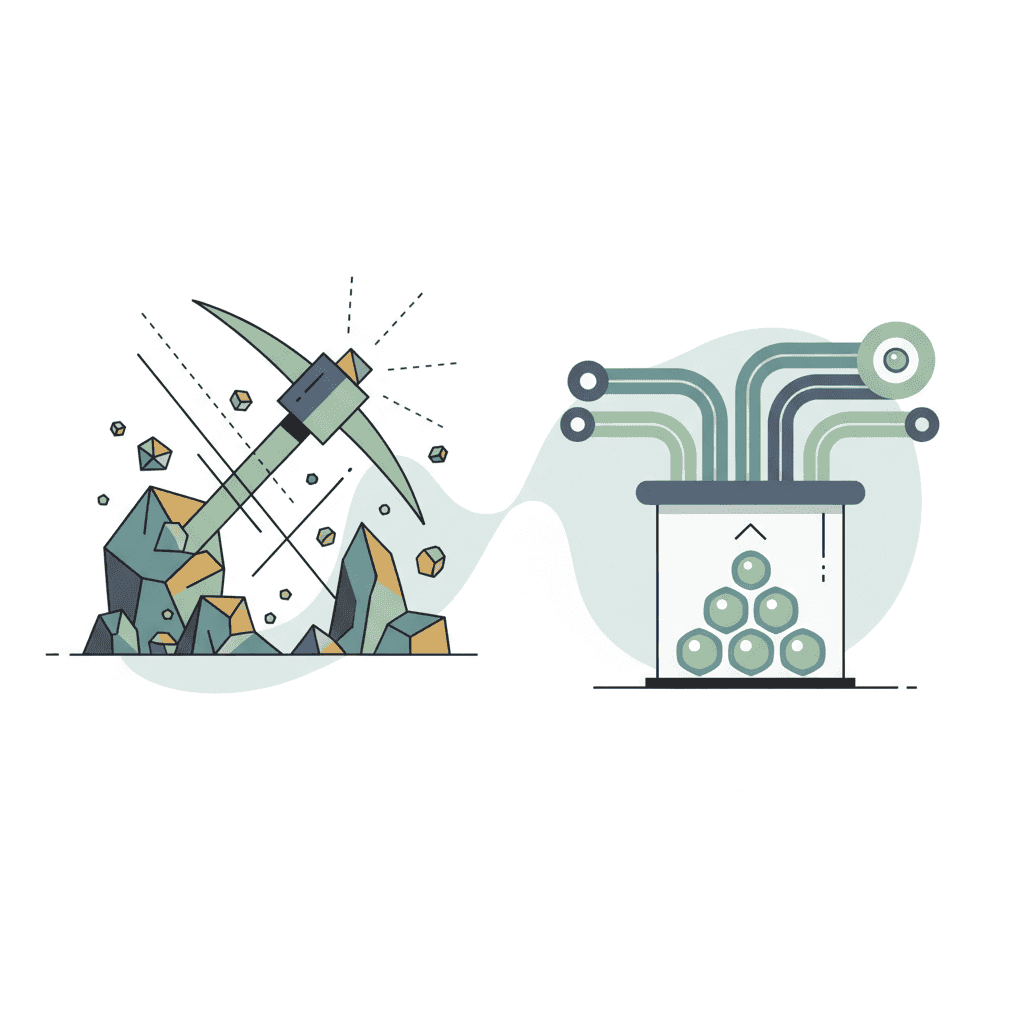
Lead gen is the marketing-owned process of deploying content, paid ads, SEO, and forms to attract potential customers who self-identify by submitting their contact details. It is inbound and scalable. A single piece of content can generate contacts while a rep is asleep. Critically, a raw lead is not a prospect. A lead becomes a prospect only after it has been qualified against the ICP. Lead generation creates the raw material; prospecting is the extraction. The two motions are sequential at times, but they are never the same thing.
Why conflating the two costs revenue teams pipeline
Three failure modes appear consistently when organisations blur these definitions. First, sales teams chase unqualified MQLs that marketing labels as leads, burning time on contacts who downloaded a PDF out of curiosity. Second, marketing spends budget attracting wrong-fit companies because no documented ICP was shared across functions. Third, and most damaging, there is no agreed handoff moment, so deals stall in a no-man's land between marketing automation and CRM ownership. Without a shared definition, CRM data degrades quickly because records lack consistent source and stage tagging. Review the practical differences between lead generation and prospecting to see how to document this separation for your team.
The Core Differences Between Sales Prospecting and Lead Generation
Companies with a documented, role-separated definition of prospecting versus lead generation close deals at a measurably higher rate than those that do not. Multiple B2B demand-generation analyses confirm this pattern. The structural differences across ownership, channel, funnel stage, and success metrics are what make that separation operationally possible.
| Dimension | Sales Prospecting | Lead Generation |
|---|---|---|
| Who owns it | Sales (SDR/BDR/AE) | Marketing |
| Initiative direction | Outbound, seller-initiated | Inbound, buyer-initiated |
| Primary channels | Cold email, cold calling, LinkedIn direct | SEO content, paid search, webinars, lead magnets |
| Funnel stage | First contact with a targeted account | Top of funnel, pre-contact awareness |
| Primary KPIs | Meetings booked, reply rate, opportunities created | MQL volume, cost per lead, form conversion rate |
| CRM entry point | Rep creates contact record manually or via sequence tool | Form submission auto-creates CRM record |
Who owns each motion, sales or marketing?
Prospecting budget and headcount sit squarely inside sales. SDR and BDR teams are the primary prospecting resource in most B2B organisations. Lead generation budget sits in marketing, funding content production, paid campaigns, and automation tooling. In RevOps-mature organisations, a shared SLA governs the handoff between the two functions, defining what qualifies as a marketing-qualified lead and when it routes to a rep. Blurring ownership creates accountability gaps that no amount of pipeline review will fix.
Outbound vs inbound, where the initiative sits
The cleanest way to separate the two motions is to ask who moved first. In prospecting, the seller always moves first. In lead generation, the buyer moves first, responding to content, an ad, or a search result. LinkedIn straddles both: social selling, where a rep engages a prospect's posts before sending a direct message, is outbound prospecting. A LinkedIn article that attracts inbound messages from interested buyers is lead generation. The channel is the same; the initiative direction is opposite.
How timing in the sales funnel separates the two
Lead generation operates at the very top of the funnel, the awareness and consideration stages, before any direct human contact occurs. Prospecting can reach a target account at any point in their awareness journey, including accounts that have never seen a single piece of your content. A prospect contacted cold may be completely unaware your company exists. This is actually a structural advantage: prospecting can compress time-to-pipeline by bypassing the nurture phase entirely when the timing is right for the buyer.
What does success look like for each approach?
Success metrics differ by function, and mixing them across teams produces dashboards that mislead rather than direct.
Prospecting success metrics:
- Meetings booked per rep per week (benchmark: 5-10 in a structured motion)
- Opportunity creation rate from contacted accounts
- Reply rate on cold email sequences
- Pipeline value sourced per rep per quarter
Lead generation success metrics:
- MQL volume per month
- Cost per MQL
- Form conversion rate on landing pages
- Lead-to-opportunity conversion percentage
Tracking prospecting KPIs against marketing targets, or vice versa, creates the illusion of performance where none exists. Build separate dashboards and use data-driven B2B targeting principles to keep each motion accountable to its own output.
How Sales Teams Use Prospecting to Build Pipeline
A VP of Sales at a mid-market SaaS company once told her team: "We are not waiting for marketing. Every rep owns a named list of 50 accounts, and every week that list shrinks by the number of conversations we book." That is prospecting as a system, not a tactic.
Defining your ideal customer profile before you dial or type
An ICP must cover three dimensions before a rep contacts anyone. Firmographic: company size, industry, and geography. Technographic: current tech stack, CRM in use (HubSpot, Salesforce, Pipedrive), and integrations already deployed. Behavioural: signals of growth, transition, or pain that indicate a buying window is open. Without a locked, documented ICP shared between sales and marketing, reps waste cycles on wrong-fit accounts and CRM data degrades at the source. The ICP is a business asset, not a sales memory.
Cold email and cold calling as structured prospecting techniques
Cold email at the account level means personalisation beyond a first-name merge field. The subject line earns the open. The opening line references something specific to the company or the individual. The value proposition is one sentence, outcome-led. The CTA asks for one thing only. Cold calling requires pre-call research, a pattern interrupt in the first five seconds, and a voicemail strategy for the 80% of calls that go unanswered. Both techniques work as part of an 8-12 touchpoint sequence run over 2-4 weeks. Email deliverability depends on domain health, sending limits, and warm-up protocols; shortcuts here kill reply rates.
Social selling and trigger-based outreach strategies
LinkedIn has over 1 billion members, making it the primary B2B social selling channel for outbound prospecting. Social selling is not blasting connection requests. It is engaging with a prospect's content before reaching out, sending a connection request with specific context, and building familiarity through comments before a direct message. Trigger-based outreach layers on top: funding announcements, new leadership hires, job postings signalling growth, and conference attendance all create moments of relevance that lift reply rates above cold-list averages. Conference attendance is particularly high-signal; see conference and event automation for how to systematise post-event outreach at scale.
What are the biggest challenges sales reps face when prospecting?
- Maintaining a clean, current prospect list as contacts change roles and companies
- Personalising outreach at scale without sacrificing quality for volume
- Avoiding spam filters on cold email through poor domain practices or high send volumes
- Tracking multi-touch sequences without a structured CRM workflow to log every touchpoint
- Knowing when to move on versus continue following up on an unresponsive account
Each challenge has a documented process or tooling solution. The absence of process, not effort, is usually the root cause.
How prospecting goals connect directly to revenue targets
Prospecting activity is a financial equation. Start with the revenue target, then work backwards: required closed deals equals target divided by average deal size. Required pipeline equals closed deals divided by win rate. Required opportunities equals pipeline divided by close rate. Required meetings booked equals opportunities divided by meeting-to-opportunity conversion rate. Required outreach volume equals meetings divided by reply rate. Every rep who understands this chain self-manages their activity without needing a manager to chase them. CRM pipeline stage tracking makes this math visible in real time rather than at quarter-end.
How Marketing Teams Drive Lead Generation
What does it actually take for a potential buyer to raise their hand before your sales team ever contacts them? The answer is a deliberate stack of inbound assets, including content, paid campaigns, and lead magnets, each engineered to pull the right company profile into your funnel at the moment they have a problem worth solving.
Inbound tactics, content, SEO, and lead magnets that attract qualified leads
SEO-optimised blog content targets search queries at the problem-awareness stage, placing your brand in front of potential leads before they know your name. Gated lead magnets, such as PDF guides, ROI calculators, and templates, convert anonymous traffic into named contacts with verifiable company email addresses. The quality of the lead depends on the specificity of the asset. A generic ebook attracts everyone; a narrow workflow template attracts the ICP. This is why asset design is an ICP exercise, not a content exercise. For a deeper look at building the right infrastructure, the data-driven B2B marketing platform guide covers tooling and measurement in detail.
Paid campaigns and brand awareness as top-of-funnel tools
Paid search targets high-intent queries from buyers already in a research mindset. LinkedIn paid campaigns target by company size, job title, and industry, making it the most precise B2B targeting channel available. Retargeting recaptures visitors who did not convert on first visit. Brand awareness campaigns, including display, podcast sponsorships, and newsletter placements, do not generate leads directly but shorten the conversion path by building familiarity before a rep makes contact. The trade-off is straightforward: paid generates faster volume, but the pipeline stops the moment spend stops.
How does a lead magnet move a prospect into your CRM?
- A visitor lands on a dedicated landing page via organic search or a paid campaign.
- The visitor completes a form, submitting their name, company email, role, and company size, to access the asset.
- The form submission triggers automatic lead capture and CRM record creation in HubSpot, Salesforce, Pipedrive, or Attio.
- Automation tags the record with source channel, asset downloaded, and submission timestamp for attribution.
- The lead enters a nurture sequence or is routed directly to a sales rep if it meets the predefined MQL criteria.
Note that CASL (Canadian Anti-Spam Legislation) and GDPR both require explicit consent language on every form, including a visible link to the company privacy policy. Every user submitting a form must understand how their data will be used. A missing policy link is a compliance exposure, not a minor omission.
Measuring marketing-sourced pipeline contribution
The metrics that matter are MQL volume, MQL-to-SQL conversion rate, cost per MQL, marketing-sourced pipeline in dollars, and marketing-sourced revenue in dollars. Without UTM tracking and CRM attribution configured correctly, marketing cannot prove pipeline contribution, and budget conversations become opinion-based. A well-configured HubSpot or Salesforce instance automates attribution reporting, connecting form submissions to closed revenue without manual reconciliation. Best-in-class B2B marketing efforts target 40-60% marketing-sourced pipeline as a share of total pipeline, positioning marketing as a quantified revenue function, not a cost centre.
Lead Nurturing: Turning Raw Leads Into Sales-Ready Opportunities
Before marketing automation existed, every lead went directly to a sales rep whether it was ready or not. The result: reps wasted hours on contacts who had downloaded a PDF out of curiosity, not intent. Modern lead nurturing emerged specifically to solve that problem, moving raw interest toward sales-readiness before human effort is deployed.
What is lead nurturing and when does it begin?
Nurturing begins the moment a lead enters the CRM, not when a sales rep decides to call. It is a structured process of value-add touches, including emails, case studies, and targeted content, designed to educate the contact and surface genuine buying intent. The goal is not to sell. The goal is to qualify. A lead that reaches the end of a nurture sequence showing high engagement is a meaningfully different asset than the raw form submission that entered the system 60 days earlier.
Segmenting leads by behaviour and fit to prioritise outreach
Effective segmentation uses two dimensions: fit and intent. Fit measures whether the company matches the ICP on firmographic and technographic criteria. Intent measures whether the contact is showing buying signals through behaviour. High fit plus high intent equals immediate routing to a sales rep. High fit plus low intent equals continued nurture. Low fit regardless of intent equals deprioritisation. Lead scoring models in HubSpot or Salesforce automate this triage, flagging the right records for the sales team at the right moment. CRM data quality is a prerequisite; a scoring model built on incomplete customer records produces inaccurate routing.
Automated nurture sequences vs human touchpoints, when to use each
Automated sequences handle the early stages of the nurture process at zero incremental cost per touch. Emails, content recommendations, and educational resources can run for 30-90 days depending on the sales cycle without any rep involvement. Human touchpoints, such as a personalised email from an account executive or a LinkedIn message referencing a specific piece of content the lead engaged with, should be triggered by a behavioural threshold, such as a pricing page visit, three consecutive email opens, or webinar attendance. Using human effort before that threshold is reached is the same inefficiency that lead nurturing was designed to eliminate. Platforms including HubSpot workflows and Salesforce Engagement Studio are the two most widely deployed tools for automating this handoff logic. Cognism's analysis of moving leads toward sales-readiness reinforces that the nurture phase is what separates a raw contact from a qualified opportunity the sales team will prioritise.
As your organisation separates these motions more precisely, the Outport AI blog covers automation frameworks for lead response, CRM workflows, and event-based pipeline generation that connect prospecting and lead generation into a single, measurable revenue system. For a related perspective on the revenue team's role in generating qualified demand, visit Outport AI to see how automation applies across the full GTM stack. You can also find additional context in SuperOffice's overview of the manual vs automated nature of prospecting and in the TOPO breakdown of complementary engines for scalable demand growth.
Key Takeaways
- Prospecting is sales-owned and outbound; lead generation is marketing-owned and inbound. Assign separate budgets, separate headcounts, and separate KPIs to each motion.
- A lead is not a prospect until it has been qualified. Raw MQL volume is a marketing metric; opportunity creation is a sales metric. Do not conflate them in your pipeline reporting.
- A documented ICP shared between sales and marketing is the prerequisite for both motions to work. Without it, prospecting targets wrong-fit accounts and lead generation attracts them.
- Lead nurturing bridges the gap between a raw inbound contact and a sales-ready opportunity; automate the early stages and reserve human touchpoints for behavioural triggers.
- CRM attribution and UTM tracking are non-negotiable if marketing-sourced pipeline is to be measured and defended in a budget conversation.
FAQ
What is the main difference between prospecting and lead generation?
Prospecting is a sales-initiated, one-to-one outbound motion where a rep directly contacts a specific individual who fits the ICP. Lead generation is a marketing-owned, one-to-many inbound motion that uses content, SEO, and paid ads to attract buyers who self-identify by submitting a form. The key difference is who initiates contact: the seller in prospecting, the buyer in lead generation.
Can a company do both prospecting and lead generation at the same time?
Yes, and most B2B companies should run both in parallel. Lead generation feeds the top of the funnel with inbound contacts; prospecting targets named accounts regardless of whether they have engaged with inbound content. The two motions are complementary. The risk is conflating them, which creates measurement confusion and accountability gaps between sales and marketing.
Who is responsible for prospecting in a B2B sales team?
In most B2B organisations, SDRs (Sales Development Representatives) and BDRs (Business Development Representatives) own prospecting activity. They identify target accounts, run outbound sequences across cold email and LinkedIn, and book qualified meetings for account executives to advance. In smaller teams, account executives may carry both the prospecting and closing responsibilities.
What tools are commonly used for lead generation and prospecting?
- Lead generation: HubSpot, Marketo, Pardot (marketing automation and lead capture); Google Ads and LinkedIn Campaign Manager (paid traffic)
- Prospecting: Outreach, Salesloft, Apollo (sequence management); LinkedIn Sales Navigator (account and contact research); HubSpot, Salesforce, Pipedrive, Close, or Attio (CRM pipeline tracking)
How long does lead nurturing typically take in B2B?
A B2B lead nurture sequence typically spans 30 to 90 days, depending on the length of the sales cycle and the complexity of the buying decision. Enterprise deals with long evaluation periods warrant longer sequences. Behavioural triggers, such as pricing page visits or webinar attendance, can shorten the timeline by escalating a lead to sales before the sequence completes.
What is a lead magnet and why does it matter for lead generation?
A lead magnet is a gated content asset, such as a whitepaper, template, ROI calculator, or webinar, that a visitor accesses by submitting their contact details. It matters because it converts anonymous web traffic into named, contactable leads with verifiable company information. The specificity of the asset determines the quality of the lead; a narrow, ICP-targeted asset attracts higher-fit contacts than a generic ebook.